
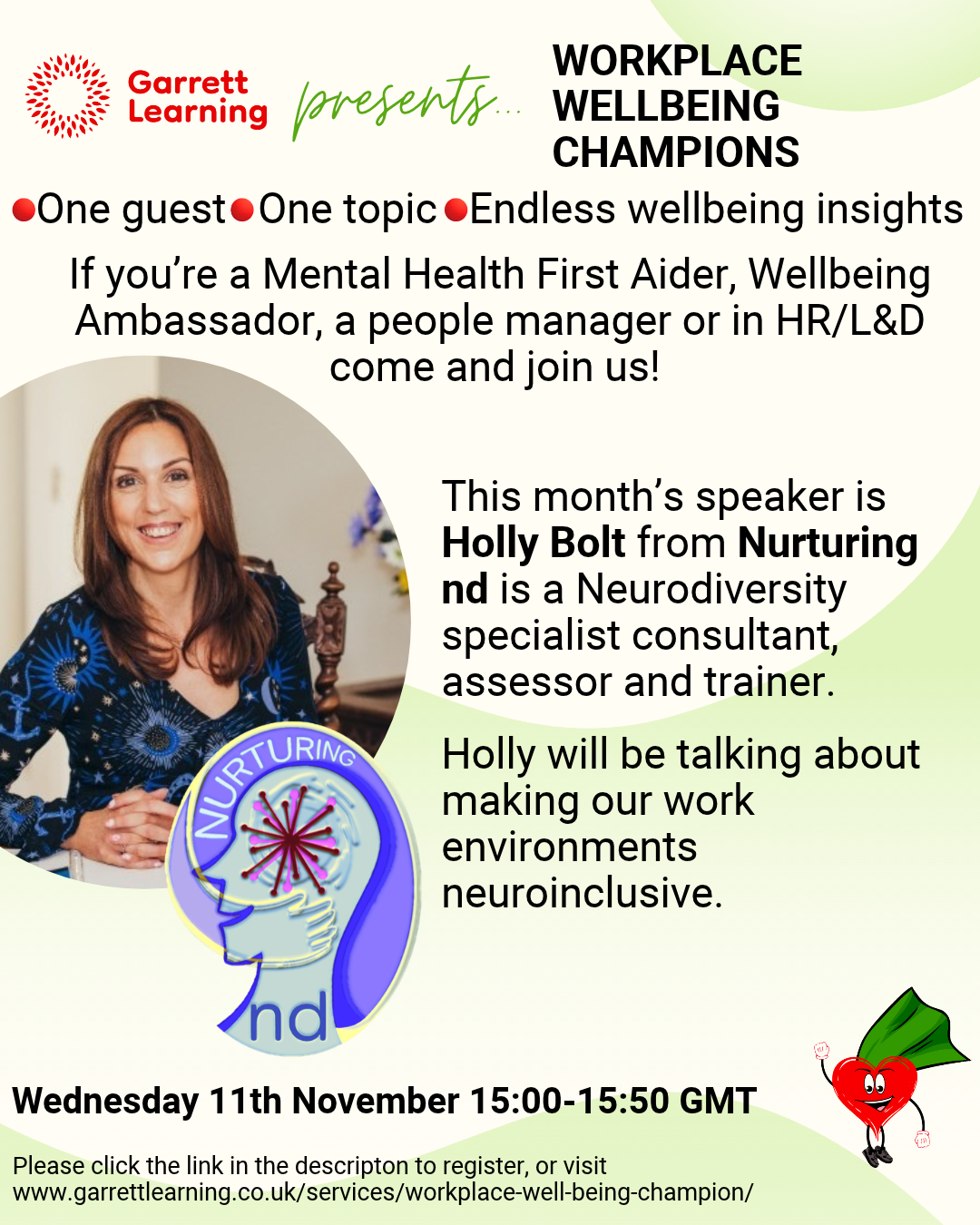
We had the absolute delight of Holly Bolt, a neurodiversity specialist consultant, assessor and trainer and founder of Nurturing nd join us at the Workplace Wellbeing Champion network.
From the start we all were made to feel safe and comfortable. It was a lovely start to the meeting where Holly mentioned how we could participate. That included having movement breaks, turning the camera off, using stem/fiddle toys and explaining what she would be covering during the session.
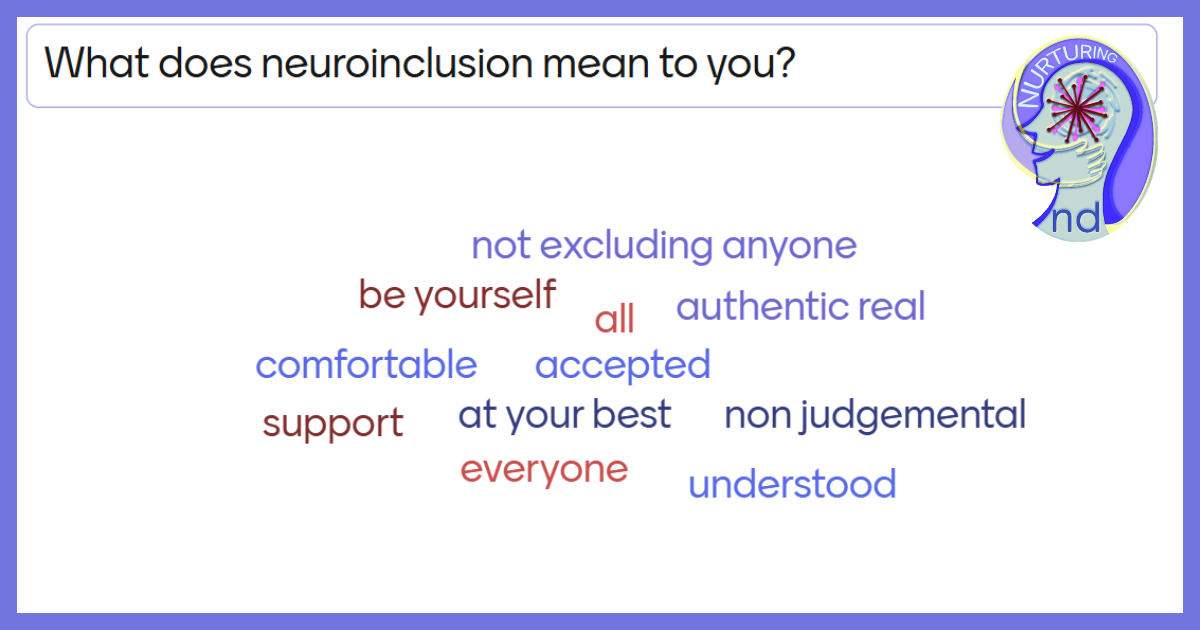
Holly started with a Mentimeter word cloud – ‘What does neuroinclusion mean to you?’
We chatted about what neurodiversity is, the language around it and that we all have diversity, as it is how our minds work. A neurodivergent mind works differently, in terms of how we think, act and how we process information.
1 in 5 people identify as neurodivergent and each neurotype can overlap.
Common neurodiverse types include:
- ADHD
- Autism
- Dyslexia
- Dyscalculia
- Dysgraphia
- Dyspraxia
- Tourette syndrome
In the workplace, people should have the choice to disclose. Some people might have a formal diagnosis and others self-diagnose; however, it is important to know that you don’t need a medical diagnosis to access support. However, people do not disclose because of:
- Fear of risk of disclosure
- Impact on career progressions
- Changes might not be put in place or adjustments made
- Misunderstanding/stigma
Lots of research has been carried out to show that workplaces that actively support the neurodiverse individual show that their employees will stay longer in their organisation, as they have the understanding, care and support they need.
Employers could have a supportive conversation and could provide a ‘menu’ of support services and reasonable adjustments that could be considered. Budget is often a concern; however, these suggestions don’t always require a big budget to put this into place:
- Standing desks
- Movement breaks
- Extra time for tasks
- Understanding how the individual likes to be communicated with
- Create an employee resources group/champions network
Holly kindly shared the following links that you might find useful:
ACAS: Neurodiversity at work, research, practice and policy. – https://www.acas.org.uk/research-and-commentary/neurodiversity-at-work-research-practice-and-policy/report
2025 Neuroinclusion Survey: Full Report from GAIN Together https://www.canva.com/design/DAHFbpm4sX0/_2TT5IYoOabaC0Tm4saYxw/view?utm_content=DAHFbpm4sX0&utm_campaign=designshare&ut
City-and-Guilds-Foundation-Neurodiversity-Index-Report-2026.pdf
https://www.cipd.org/uk/ knowledge/reports/neuroinclusion at-work/
The list of awareness days and events are:
Dyscalculia Day March 3rd 2027
Neurodiversity Celebration Week March 15th to 19th 2027
Autism Awareness Month April 2027
Tourette’s Awareness Day 7th June 2027
October is ADHD Awareness Month
Dyslexia Awareness Week 5th- 11th October
Dyspraxia Awareness Week 12th–18th October
Developmental Language Disorder Day 16th October 2026
Invisible Disabilities Week 18th–24th October
If you would like to contact for further information on how she can support you and your organisation, join her networking or read her article, please do contact or follow Holly:
Email address is Holly@Nurturingnd.co.uk
Website nurturingnd.co.uk
Linkedin: https://www.instagram.com/nurturingnd/
Instagram: https://www.linkedin.com/in/holly-bolt-705573a4/
Facebook: https://www.facebook.com/profile.php?id=100089823405390#
