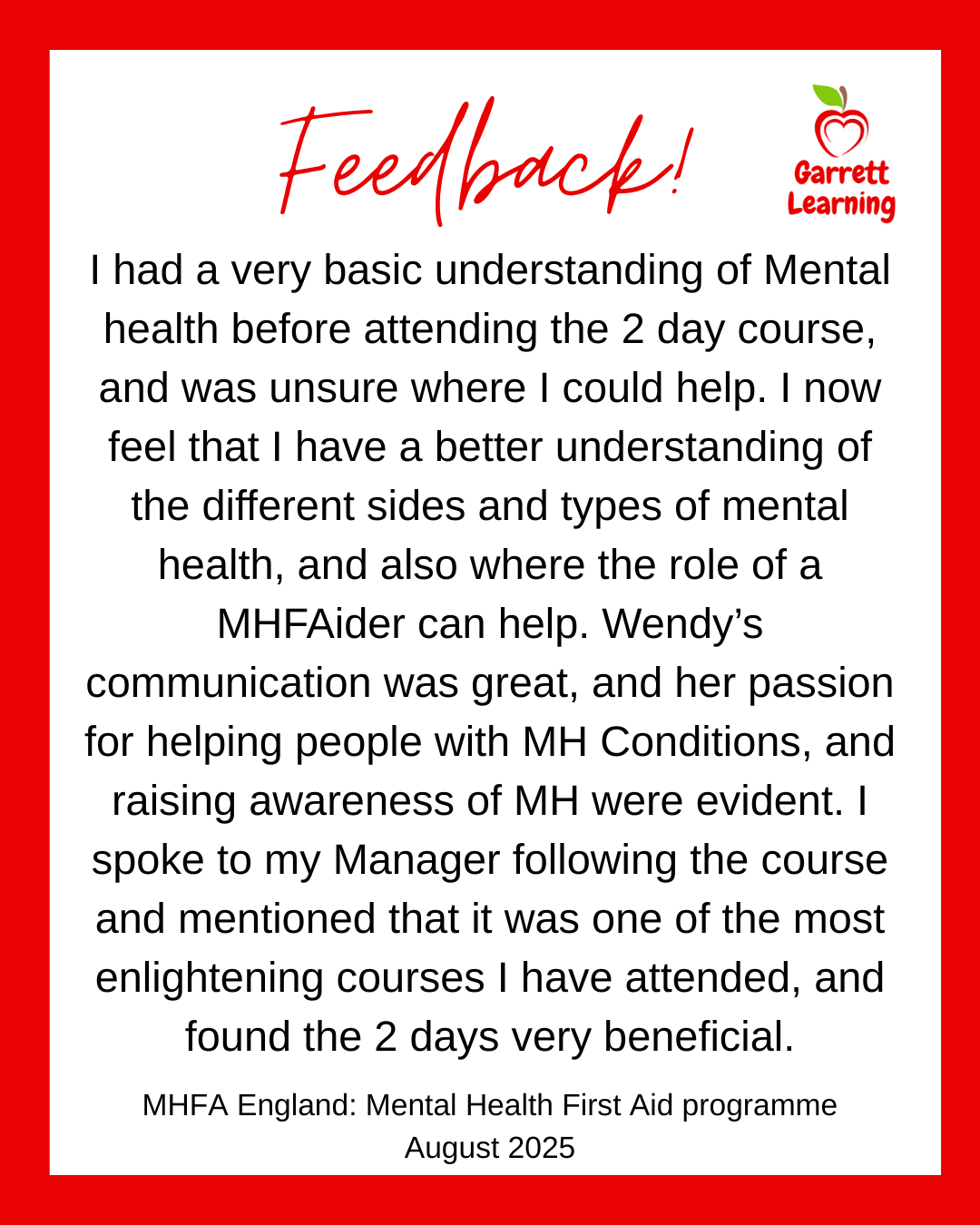
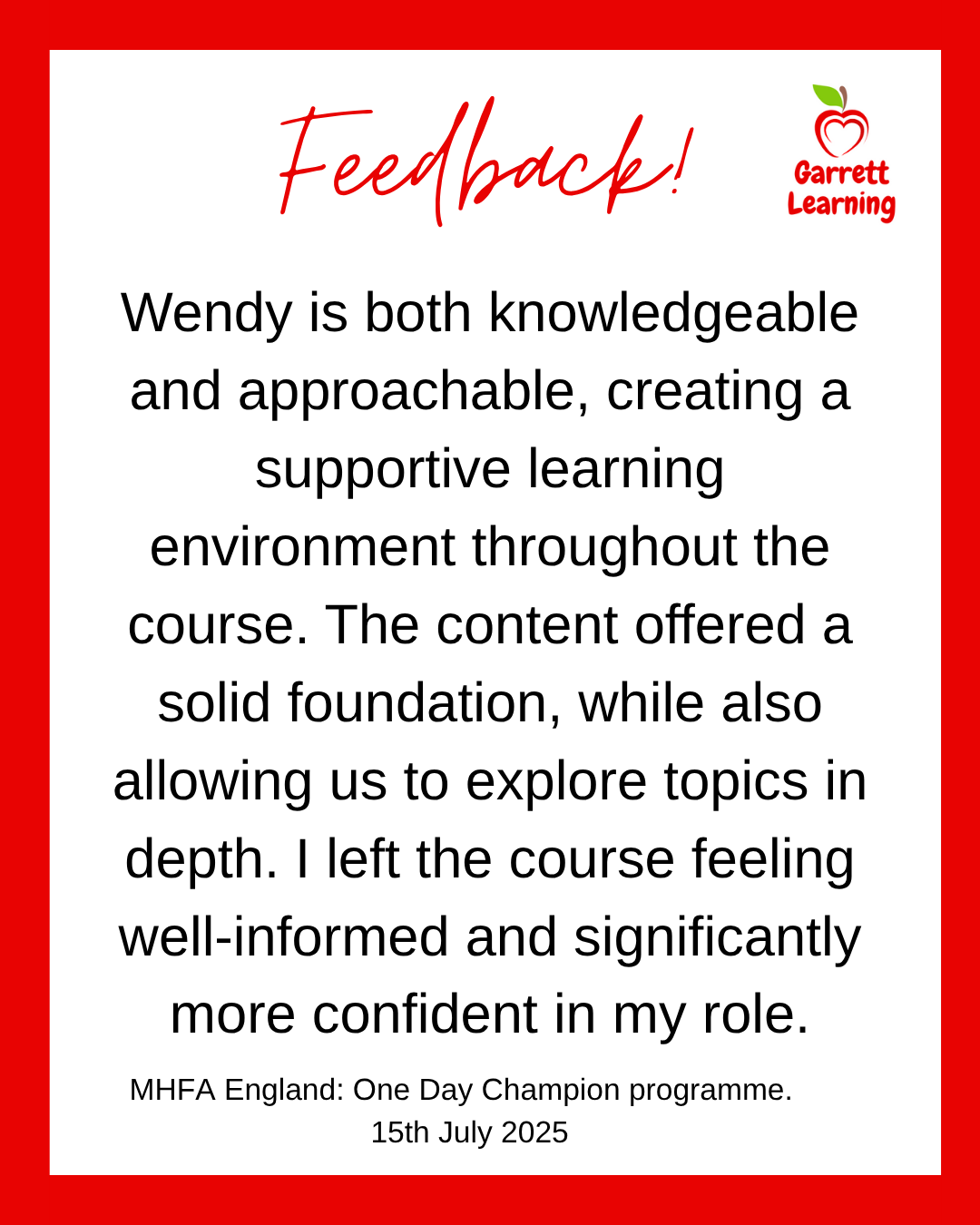
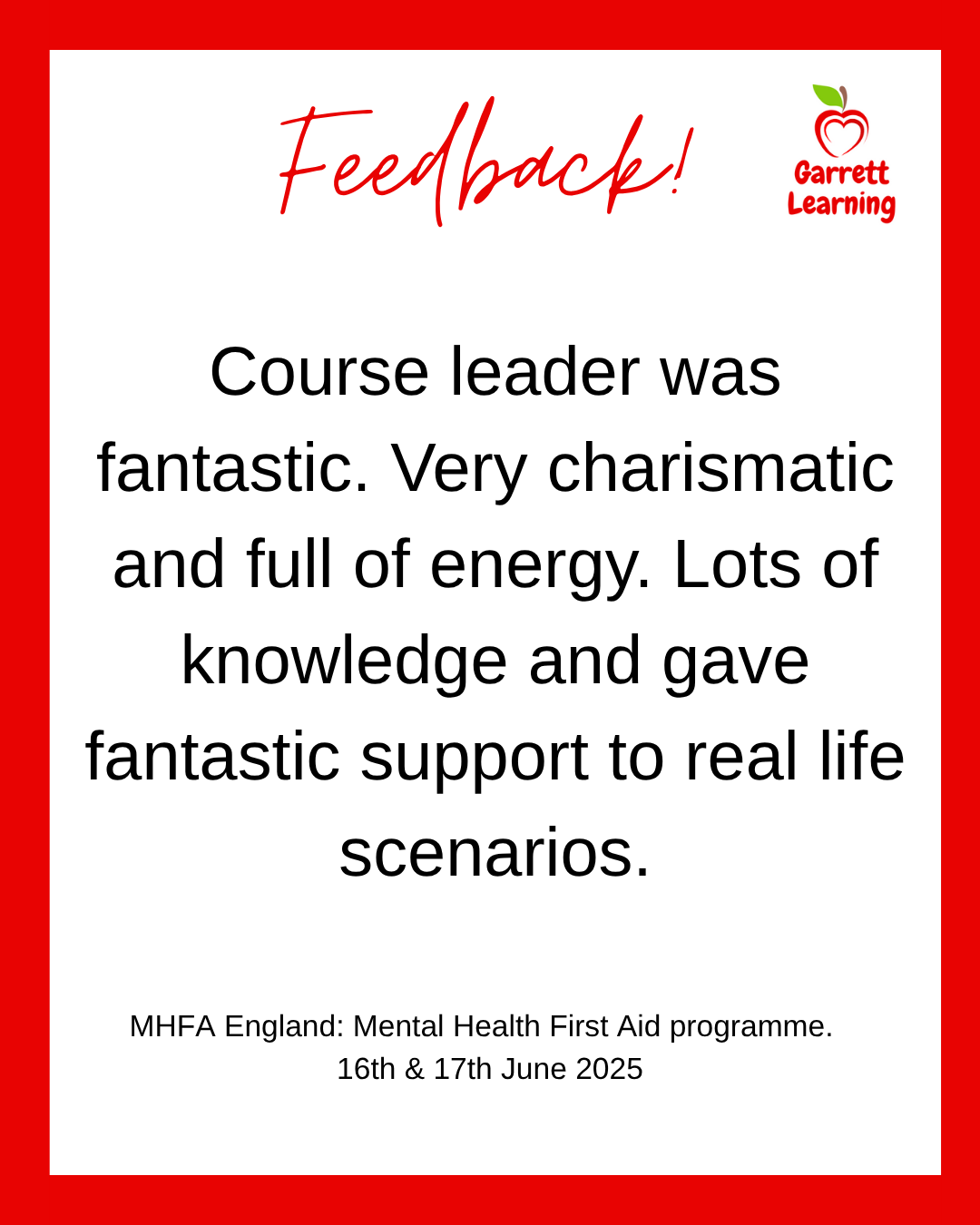
The impact of Mental Health First Aiders
Inside this month’s issue:
- The November 2025 Mental Health First Aider Impact Report
- Building on our resilience
- Did someone say new logo?
We are: * Supportive * Curious * Welcoming * Encouraging * Straightforward * We are Garrett Learning.
What’s been happening?
In November 2025 we surveyed Mental Health First Aiders which returned some insightful results. Here are the full findings of the report.
Garrett Learning Mental Health First Aider Impact Report. November 2025.
Survey of trained Mental Health First Aiders (MHFAs)
Date of survey: November 2025
Number of respondents: 25
- Executive summary
This report summarises insights from a November 2025 survey of trained Mental Health First Aiders across various organisations. Findings show that MHFAs are actively using their skills, providing meaningful support to colleagues and communities and having a positive impact. However, there are opportunities to strengthen organisational understanding of the role, increase visibility and provide additional support for those affected emotionally by their work.
Overall, the results demonstrate that Mental Health First Aiders play a vital role in promoting wellbeing, supporting individuals through difficult experiences, and connecting people with professional help.
- Key findings
Use of MHFA skills:
- 52% use their MHFA skills for around 2 hours per month on average.
- 12% use their skills more than 10 hours per month.
- 12% apply their skills daily.
- 40% use their skills weekly.
This indicates that while many MHFAs use their skills occasionally, a significant proportion are providing frequent and ongoing support.
Types of support provided:
Respondents reported using their skills in a wide range of contexts, including:
- Supporting colleagues and students
- Supporting people experiencing loneliness
- Helping those affected by bereavement, job loss, or trauma
- Navigating cultural differences and beliefs
- Promoting mental health awareness and support services
- Sharing strategies and information internally (e.g., newsletters)
- Listening without judgement and checking in regularly
- Supporting family members and in volunteer roles
MHFAs are clearly acting as accessible, trusted points of support across both professional and personal settings.
Most helpful areas of training:
Respondents identified the following as the most valuable aspects of their training:
- Ability to signpost to professional support
- Active listening skills
- Providing practical steps and strategies
- Recognising signs of poor mental health
- Empathy and non-judgmental support
- Confidence to approach sensitive conversations
- Understanding boundaries and self-care
- Having a network of other MHFAs
These findings reinforce the importance of practical, confidence-building elements within MHFA training.
- Visibility and awareness
New MHFAs raised awareness of their role through:
- Posters
- Intranet
- Emails
- Team meetings
- Informal conversations
64% said word of mouth was the most effective way of letting people know they were available for support.
Respondents would like greater organisational visibility, including:
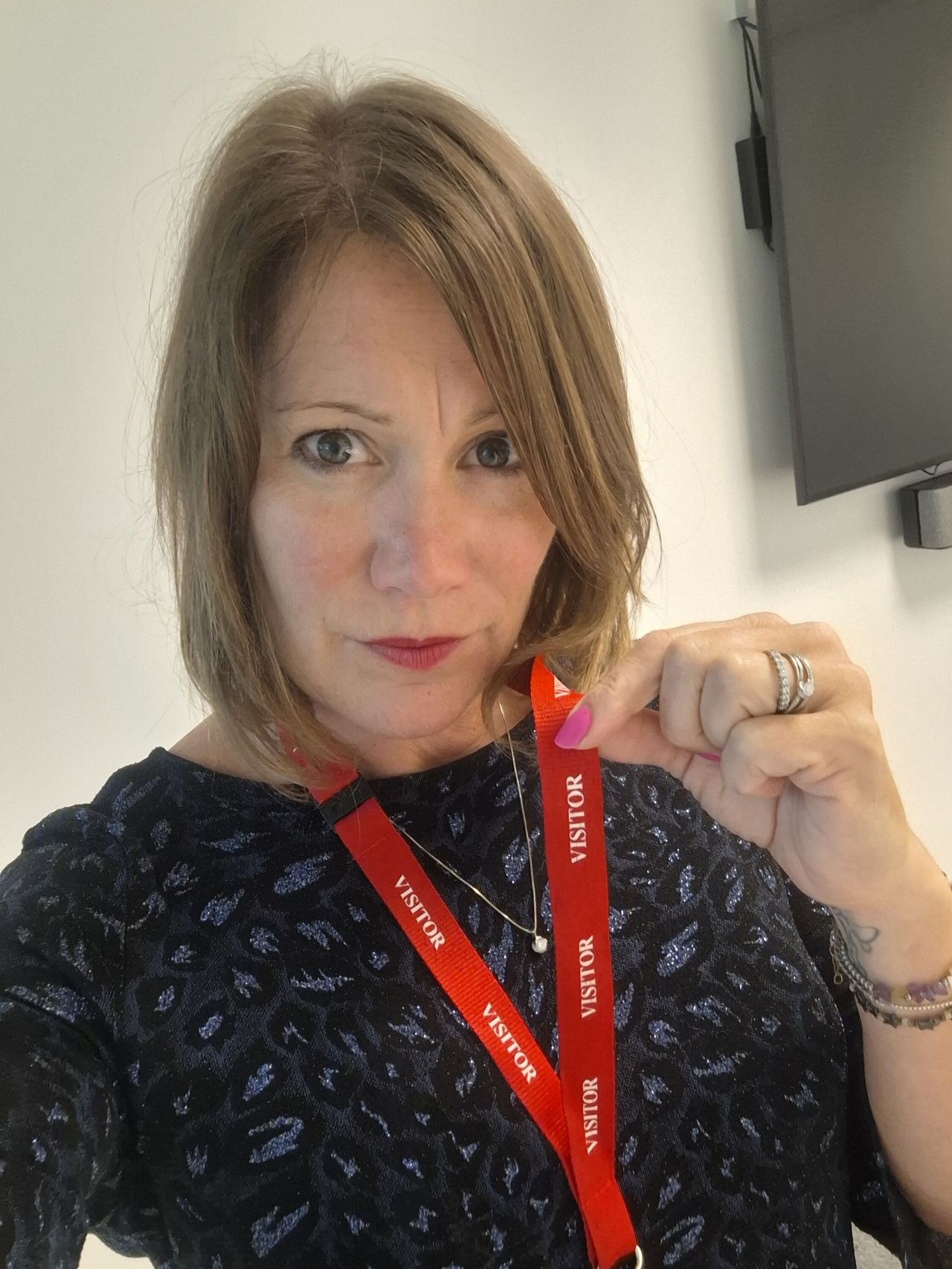
- Lanyards or identifiers
- Posters and signage
- Stickers on uniforms/high-visibility clothing
- Internal community groups
- Clear communication about the role
- Opportunities to share best practices
- Mental health conversations
Number of conversations in the last 6 months:
- 16.7% had 0-2 conversations
- 41.7% had 3-5 conversations
- 20.8% had 6–10 conversations
- 16.7% reported more than 10+ conversations
Context of conversations:
- 16% work-related
- 12% outside-of-work issues
- 72% a mix of both
This highlights that MHFAs are supporting whole-person wellbeing, not just workplace concerns.
Common themes and common issues raised included:
- Mental and physical health
- Bereavement
- Stress and overwhelm
- Financial pressures and cost of living
- Family difficulties
- Loneliness
- Business changes and poor management
- Student pressure, exams and peer pressure
- Anxiety and neurodiversity
- Addiction and illness
- Trauma and divorce
- Stigma and lack of understanding
- Sleep issues
- Impact:
- 83.3% feel they have a positive impact in their role.
- 52% have encouraged someone to seek professional help.
- 88% would recommend becoming a Mental Health First Aider.
These findings demonstrate strong perceived value and effectiveness of the MHFA role.
- Support for MHFAs
Organisational support:
- 70.8% feel fully supported
- 16.7% feel partially supported
- 12.5% do not feel supported
Support currently includes:
- Peer support sessions
- Regular check-ins
- Recognition
- Access to training
- Email updates
- Group chats
- Further development opportunities
However:
- 12.5% reported that managers do not fully understand the MHFA role.
- 60% said they have been emotionally affected by the conversations they support.
This highlights the need for clearer role understanding and stronger emotional support structures.
- Self-care practices
MHFAs reported using a wide range of self-care strategies, including:
- Morning routines and affirmations
- Exercise and walking
- Journaling
- Talking to others
- Taking regular breaks, including holidays
- Spending time with family and friends
- Humour
- Yoga, meditation and relaxation
- Positive mindset practices
These strategies are essential given the emotional demands of the role.
- Best practice identified
Based on survey responses, effective MHFA programmes include:
Visibility and communication
- Clear identification of MHFAs
- Regular reminders of support available
- Promotion through multiple channels
Support structures
- Peer support groups
- Regular supervision/check-ins
- Recognition of the role
- Ongoing training
Role clarity
- Manager awareness and education
- Clear boundaries and expectations
- Defined escalation and signposting pathways
Wellbeing of MHFAs
- Encouraging self-care
- Emotional debrief opportunities
- Access to supervision or reflective practice
- Recommendations & next steps
Increase visibility
- Provide identifiers (lanyards, badges, posters)
- Regularly communicate who MHFAs are, how to contact them and what clarification of their role is within the organisation
- Include MHFA information in inductions and team meetings
- During employee onboarding, an MHFAider introduces themselves
Strengthen manager’s understanding
- Provide briefing sessions for managers
- Clarify role boundaries and responsibilities
- Encourage managers to support MHFA time and wellbeing
Enhance Support for MHFAiders
- Regular peer support or supervision sessions
- Emotional wellbeing check-ins
- Access to refresher training
- Clear escalation pathways
Build community and best practice
- Internal MHFA network or forum
- Share case studies and learning
- Develop best-practice guidelines
- Offer continued professional development
Monitor impact
- Repeat survey annually
- Measure awareness and visibility
- Review support structures regularly
- Considerations
- MHFAs are frequently supporting complex, mixed personal and work issues.
- Emotional impact on MHFAs is significant and must be acknowledged.
- Manager understanding is key to programme success.
- Visibility directly affects uptake of support.
- Continued investment in training and peer support strengthens outcomes.
- Conclusion
The survey findings clearly demonstrate that Mental Health First Aiders are making a meaningful difference within their organisations and communities. They are supporting colleagues through challenging experiences, promoting awareness and encouraging people to access professional help.
With strengthened visibility, clearer organisational support and continued investment in training and peer networks, the MHFA role can have an even greater positive impact on workplace wellbeing and culture.
Garrett Learning can help. Please reach out to discuss holistic wellbeing services and management training. We also provide community and support by joining us monthly for the Workplace Wellbeing Chapion session or offering bespoke training. Please book in a call to discuss your thoughts and ideas: https://scheduler.zoom.us/garrettlearning/1-1-cuppa-and-chat
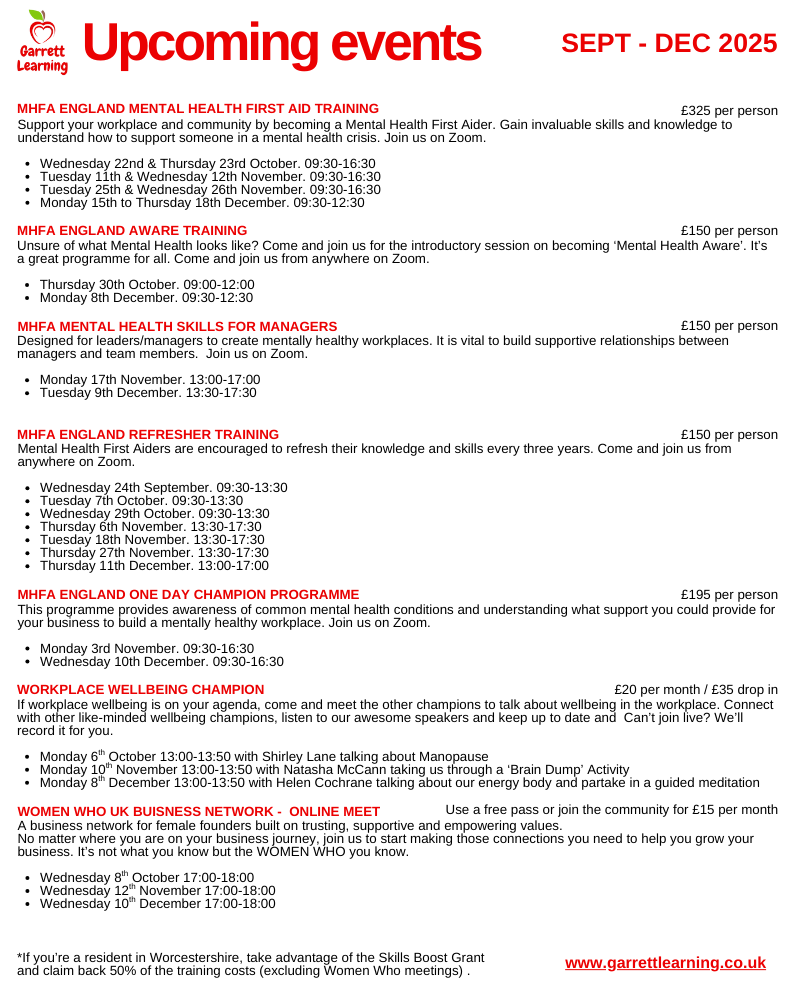
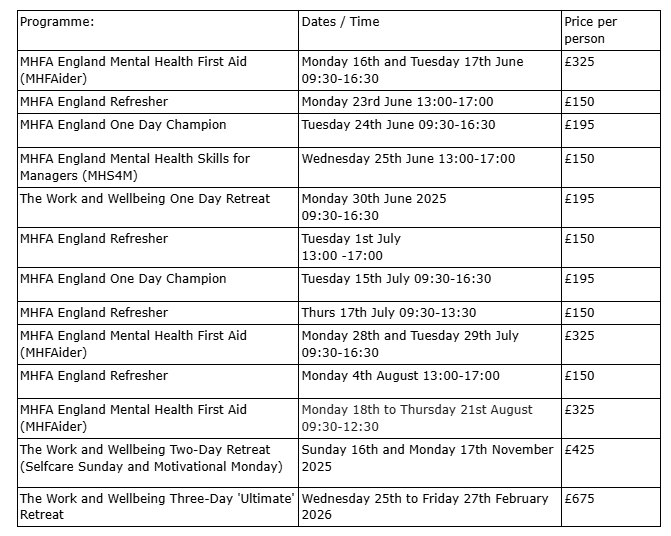
Upcoming online MHFA England online training can be found here: https://www.garrettlearning.co.uk/services/mhfa-england-mental-health-training-programmes/
Alternatively, to book a private cohort, please email wendy@garrettlearning.co.uk with your requirements.
What’s coming up?
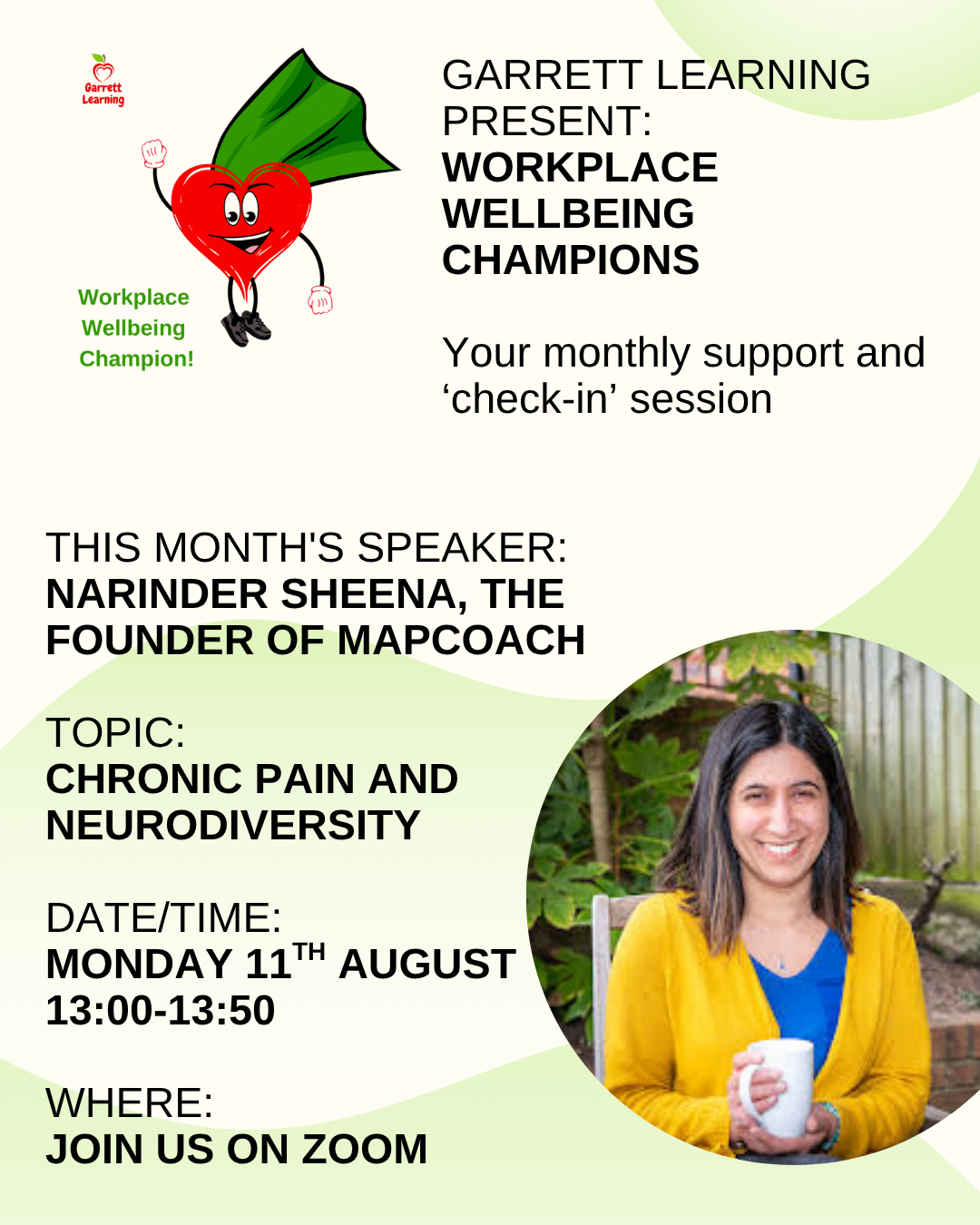
Quite appropriately timed, On Monday 9th February at 13:00 for 50 minutes we have the brilliant guest speaker, Anita Arscott Brookes from Arscott Brookes Consultancy who will be talking about ‘Resilience – The Art Of Bouncing Back’
Life and work can throw unexpected challenges our way, but resilience is the key to thriving through change. In this engaging session, you’ll discover practical strategies to strengthen your resilience and manage stress effectively. Join us to learn how to bounce back stronger and turn setbacks into opportunities for growth.

Want to get involved:
- Use your free pass – email wendy@garrettlearning.co.uk
- Join our growing community of positive, passionate and enthusiastic members for £20 per month. No contract.
- Join us for a one-time session for £35.
Find out more at: https://www.garrettlearning.co.uk/services/workplace-well-being-champion/
What’s new?
Garrett Learning are having a little make over!
I started Garrett Learning nearly 6 years ago, the 99p Canva logo just isn’t representing Garrett Learning and who we are.
We engaged the fabulous services of Eighty3Design and after many versions, here’s a sneaky peek of the new logo and fresh new bold look:

I absolutely love this and I look forward to sparking further conversations and growth within our community.
Thank you for bearing with us during this time of transition and updating everything!!
If you are enjoying our content and impact, please let me know what you want to know more about. Let’s create a 2026 of learning, development and impact together. Please share your thoughts and comments with me: wendy@garrettlearning.co.uk

Garrett Learning creates welcoming, memorable, and learner-focused learning experiences to reach individual and business goals. Book a discovery call with us to see how Garrett Learning ( www.garrettlearning.co.uk ) can help:
- People Manager Coaching
- Leadership and development sessions
- MHFA England Programmes Open courses
- Lunch and learn bitesize workshops
- Become a Workplace Wellbeing Champion
- Bespoke training
Book a chat with Wendy here: https://scheduler.zoom.us/garrettlearning/1-1-cuppa-and-chat
We (Wendy and her growing team!) are here for you when you need us. We are here to hear you! We are kind in nature and open to hearing everyone’s point of view. Our training and overall learning experiences are built to ensure you feel comfortable and can be yourself.

If you want to discuss your future plans, I’d love to hear them! Get in touch!
m: 07859 878 599
c: https://scheduler.zoom.us/garrettlearning/1-1-cuppa-and-chat
l: www.linkedin.com/in/wendy-garrett-7522bb50/
f: www.facebook.com/GarrettLearning
i: www.instagram.com/garrettlearning
t: www.tiktok.com/@garrettlearning







 MHFA Refresher (£150 per person):